
What a Pair: Killer Workout (1987) & Death Spa (1989)
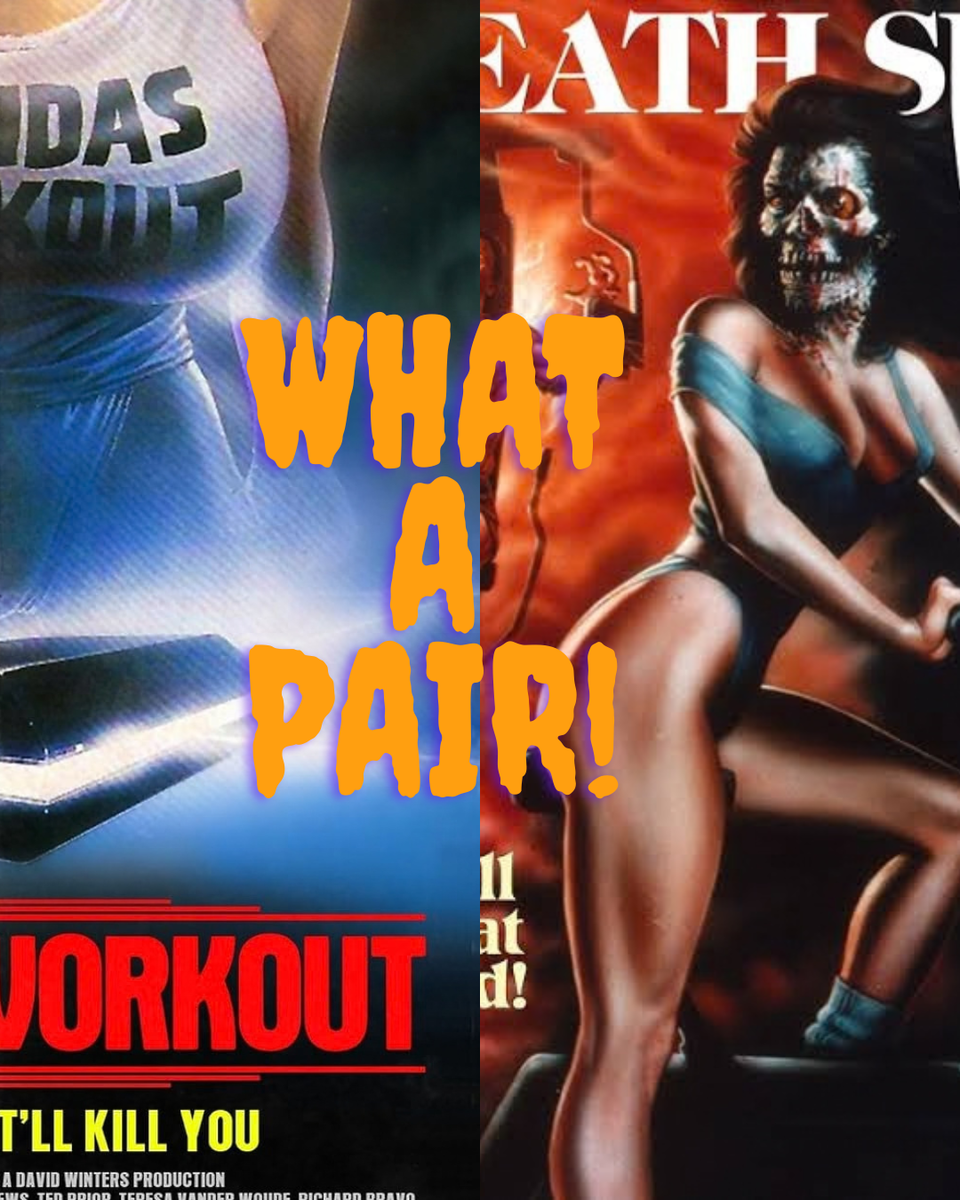
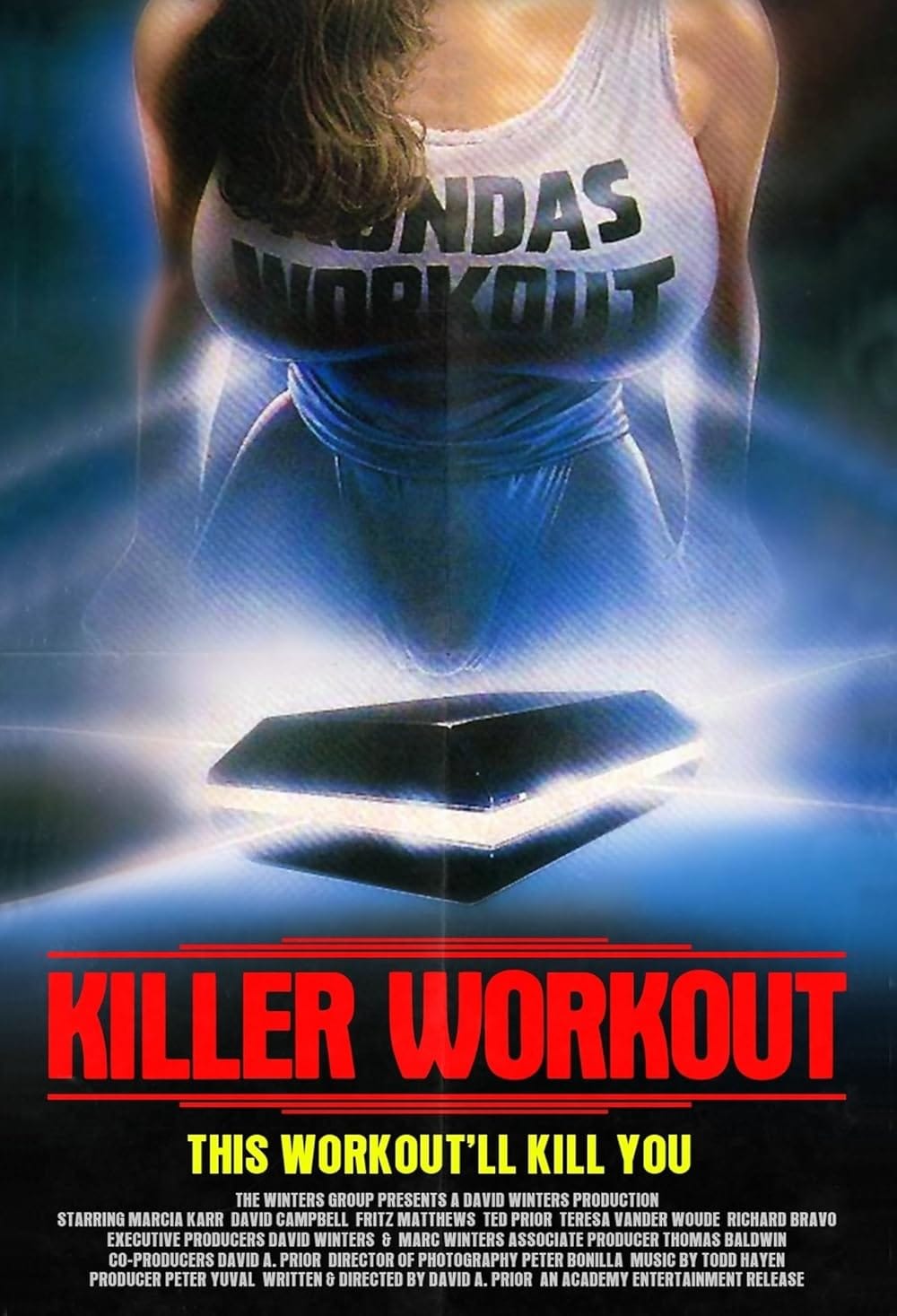
In the eighties, slashers were king. The multiplex was booming, and the drive-in was on its way out. A shame, as David A. Prior's deliciously sleazy, low-budget, amoral slasher Killer Workout feels like something that would have slaughtered at the drive-in.
A lean, mean, jiggly, exploitative gem, Killer Workout may not have the most gruesome kills or even the most imaginative, but it does have a lot of stacked babes jiggling about and a low-fi quality of craftsmanship that keeps the movie from ever feeling dull.
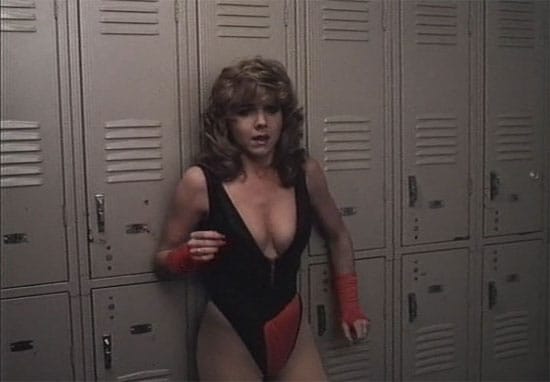
Killer Workout is also positively wallowing in the gaze. The movie is an hour and twenty-right minutes, and part of the reason for the length is the montages of racked 80s babe in stretchy and revealing gym outfits jiggling and bouncing about during their aerobics class. Granted, the aerobics teacher seems to be dressed in a gym outfit dreamed up by a stripper. (That's a compliment, by the way.) In short, it's pervy, dumb, sleazy, and fun as all hell.
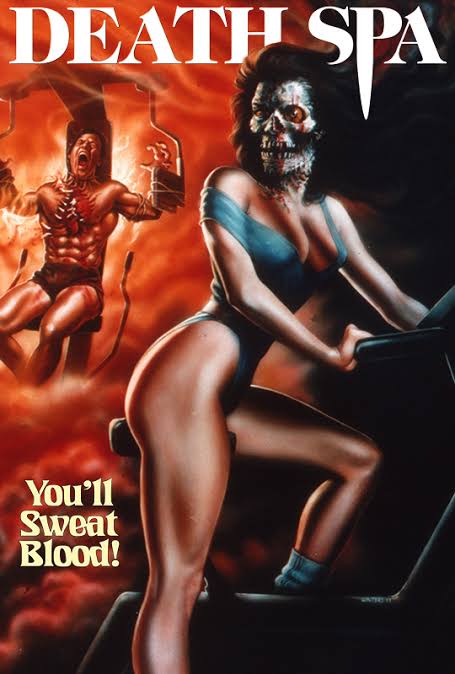
By comparison, Michael Fischa's Death Spa is a high-minded, well-polished spectacle made for the big screen. It's by no means a big-budget film; except when compared to Prior's film, the difference is night and day. Death Spa starts as a slasher before dovetailing into an American giallo. Every bit as fun, dumb, and sleazy as Killer Workout, it sadly, literally, doesn't have a cast as stacked as Prior's opus.
Spookily enough, it does share the same runtime, but feels less padded.
But like Killer Workout, Fischa is lensing his gory, bug-nutty, Death Spa through the lens of the gaze. The difference is how the two films utilize the gaze and the sleaze. Death Spa may not have as much gratuitous T&A as Killer Workout, yet the way Fischa and his DP, Arledge Armenaki, linger on the nude form is voyeuristic and so horny that it's clearly meant to be a rewind moment on VHS.
Prior's Killer Workout doesn't waste time with such cinematic flourishes. He understands that the slasher genre isn't about plot. It's a genre steeped in the ID. Gratuitous sex and violence are the genre's bread and butter because it's what it's exploring. Horror films represent a part of the craft that speaks to the dark aspects of our nature. They act as release valves for our psyche in many ways.
Of the two films, Prior understands grip-framing and the cleavage aesthetic. Prior wrote, directed, edited, and produced Killer Workout. The editing credit is the real key to the grip framing on Killer Workout. While Peter Bonilla's camera certainly ogles every chance it gets, at times even the men, it never is as leering as Armenaki's.
In all fairness, the ogling of the men feels like Prior attempting to be even-handed but, in so doing, only magnifies the lecherousness of his leering at the women's bodies. Prior and Bonilla zoom in on a dude's bicep for a few seconds. Compared to the dozens of montages of babes in spandex stretching and wobbling, it only makes the objectification of the women even more stark.
Prior, however, understands this. Which makes how he frames the head of the Gym, Rhonda (Marcia Karr), giving a dude the evil eye as he callously mourns one of the victims because he wanted to fuck her so fascinating. A push and pull runs deep in the sinew of Killer Workout. A throbbing gaze hellbent on titillation mixed with a very real understanding of the power imbalance and fraught society these women inhabit. The lecherous montages of Killer Workout are not a bug, as they serve to show how men and society treat women as slabs of sexual meat. The countless montages of writhing bodies and bouncing boobies, and how Bonilla and Prior carve up the women into aspects of their form- butts, legs, and jugs double as both prurient and as a commentary.
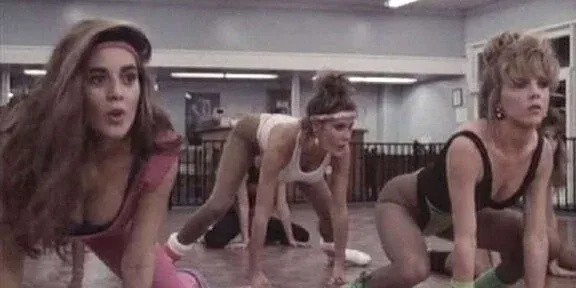
I'm not joking, this montage easily makes up like 1/3 of the runtime. I'm not complaining!
He also understands the inherent goofiness of the genre. The weapon of choice is a giant safety pin. The killer doesn't use it exclusively, but it is a weapon they use quite often. The deaths have a street-level brutality to them; the kind where the detective grimaces when he discovers the bodies.
Rhonda is the owner of the gym where both men and women seemed to be dropping like flies. Yet, our heroine is bookended by two macho dudes: the undercover private eye, Chuck (Ted Prior), hired by Rhonda's silent partner, and the brash police detective Morgan (David James Campbell) who can't help but jut out his jaw after every sentence. Both men will prove ineffectual at stopping the murders or even the killer. The women in Killer Workout are characters; they have personalities and lives outside the gym.
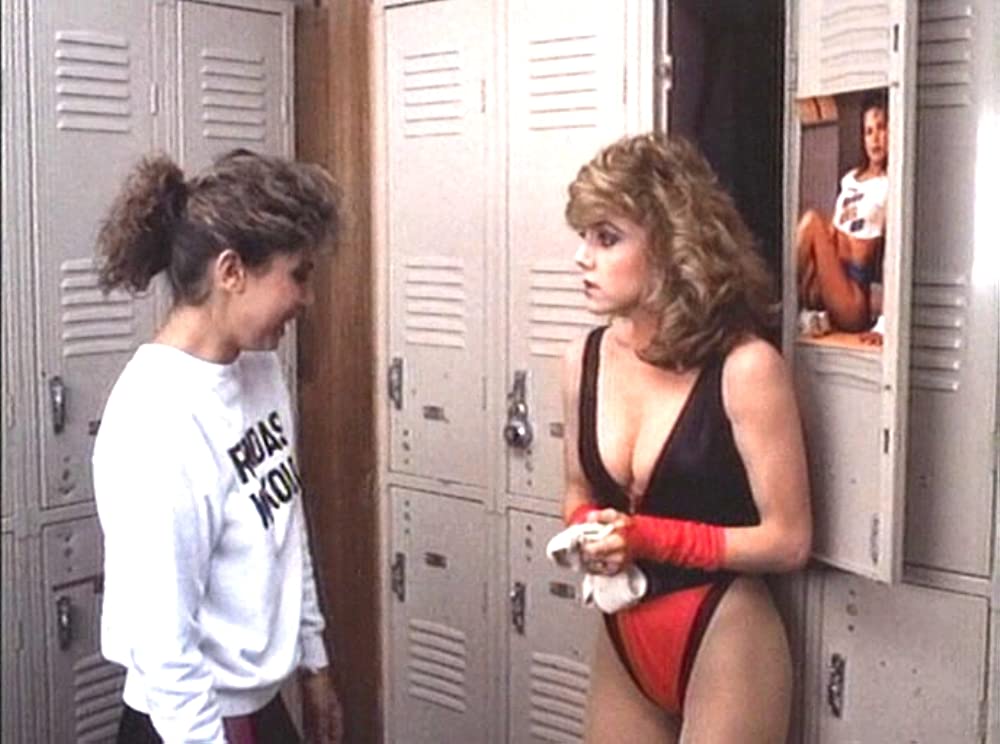
Soon it's revealed that the killer is Rhonda, who is actually Valerie, a model whose promising career was kneecapped by a tragic tanning bed accident. Prior never drills too deep into the subtext, but the notion of a woman driven mad after her once desirable body has been deformed speaks volumes, framed in a movie wherein pristine bodies are viewed as a premium of womanhood.
Women like the buxom Debbie played by the chesty Dianne Copeland. Of all the racks in Killer Workout, Copeland's is the one that steals the show. Debbie exists to be ogled and to seduce Chuck after she sees him get into a fight with one of the many meatheads from the gym.
She takes him back to her place, where she has a landline phone outside connected to nothing. A phone that Chuck is able to magically call Rhonda's silent partner on. You're not given long to think about it because Copeland comes back out in a two-piece and all logic goes out the window.
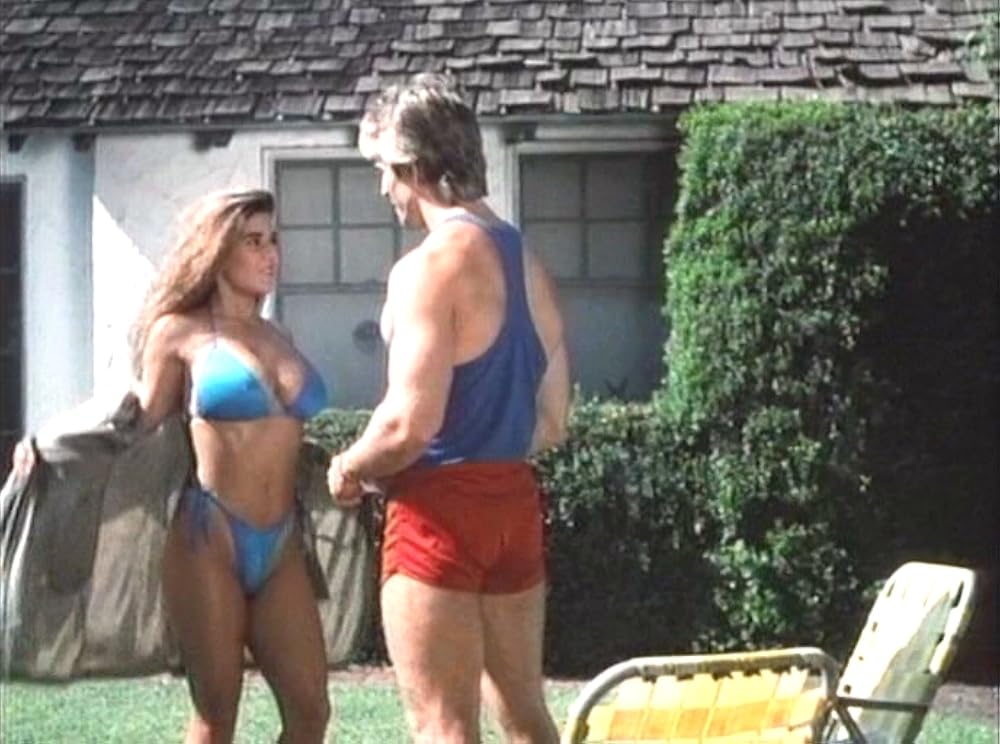
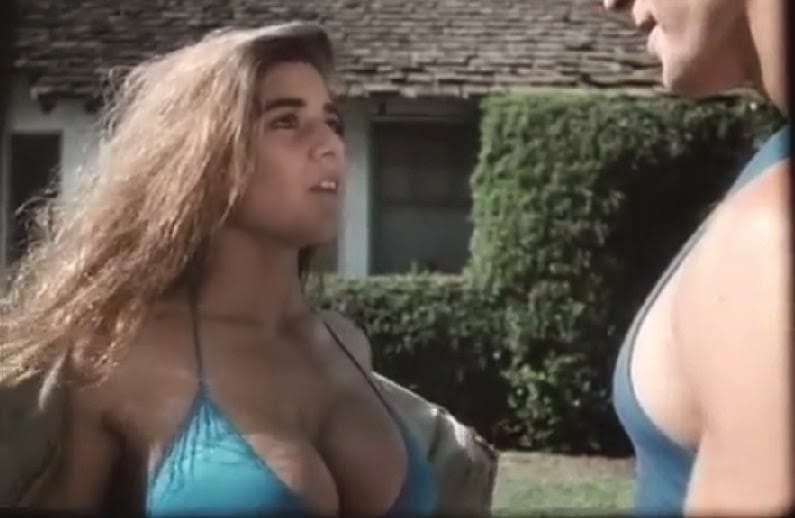
Copeland is by far the best-looking in the movie. If it weren't for the mysterious woman in blue, who we only see during the frequent "slab" montages, Copeland would be the breakout star. However, the woman in blue is constantly in danger of exploding out of her top, which makes every moment she's onscreen riveting for entirely different reasons than trying to solve the identity of the killer.
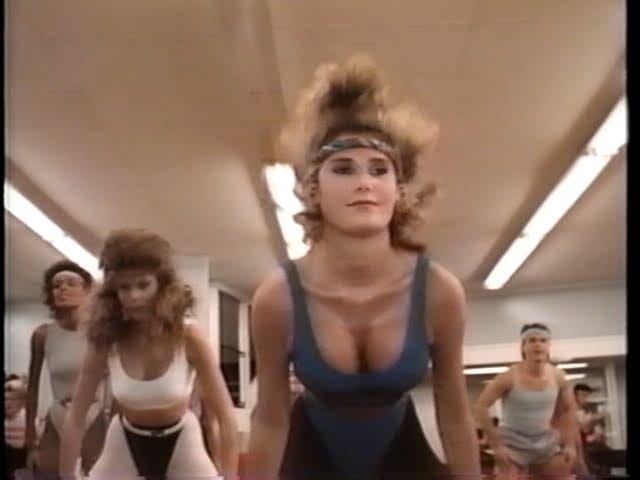
Woman in blue, whoever you are, you should have been a star! A star!
Contrast this to the more polished Death Spa, and the differences become stark. Fischa's film has more production value. Released in 1989, the film shows the death of the 80s and the birth of the 90s all in one. There's a corporate sheen to Fischa's work that is lacking in Prior's low-budget, grimy texture.
But the real contrast is that in Death Spa, it's the men who are the focal point. The owner is a suave Michael (William Bumiller), a tanned, well-off widower who seems to have his choice of the ladies. Poor Rhonda is pursued by men at every corner, both for her company, her life, and her sex in Killer Workout, and yet in Death Spa Michael seems to be living the easy life.
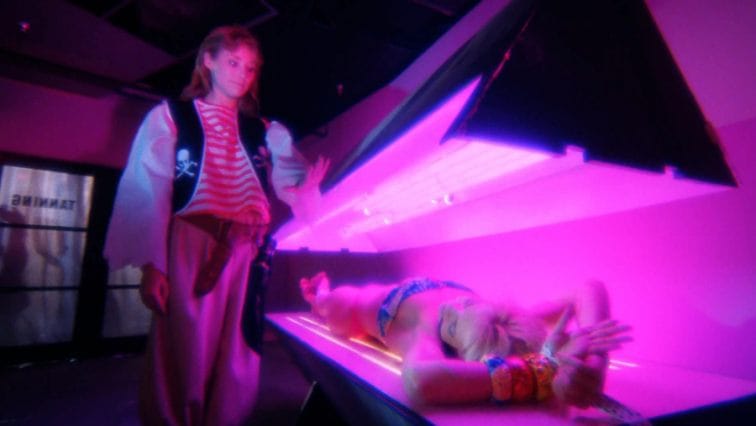
While the women in Killer Workout are ogled, and some exist purely to be looked at, they at least have lives outside the gym. Sex may be the driving force; Prior at least has it where sex is something that women have with men, as opposed to something that happens to women. He also allows them to be every bit as perverse as the men, like showing chesty aerobics instructor Jaimy (Tersea Van Der Woude) sniffing jockstraps in the locker room.
The women in Death Spa, with rare exceptions, are viewed as "slabs". Fischa's Death Spa has women as satellite characters. The only ones with any real personalities are either the ghost of Michael's crazy ex or the back-stabbing employee who's secretly working with Michael's partners to sabotage his gym. Michael's current girlfriend, Laura (Brenda Bakke), the one the camera so lovingly explored her sweat-soaked form, exists purely to be desired and rescued.
Strangely enough, Death Spa will go down smoother with a more mainstream audience because of its outrageous plot twists and stylized sheen. But of the two, it also seems to have the most contempt for women. Or, at the very least, wrestles with seeing them as anything other than damsels or whores. Prior, for all his low-down, sleazy nastiness, sees them as multi-dimensional. The women of Death Spa are more typically attractive, leaner, and more typical of women in mainstream films.
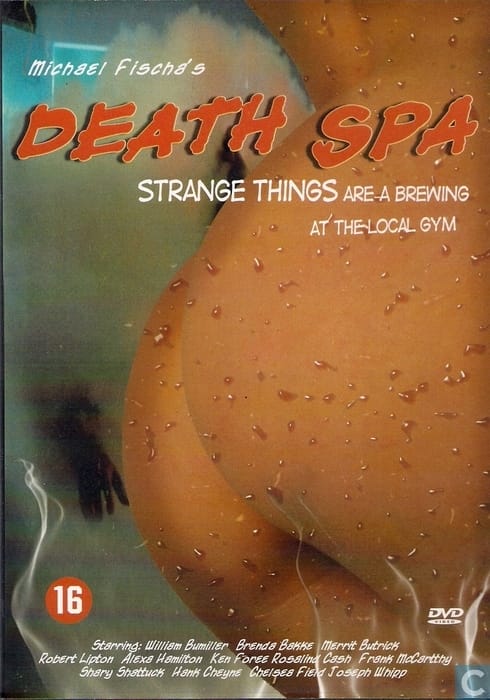
What Death Spa lacks in female agency it more than makes up for in terms of sheer lunacy. The elevator pitch of the movie is that lightning strikes the Starlight Body gym, causing its supercomputer to turn homicidal. Except it's really the ghost of Catherine (Shari Shattuck), Michael's ex-wife, who went mad after her miscarriage and burned herself alive.
Death Spa is a deeply silly movie with some nice gore and more visual panache than an 80s slasher usually possesses. The script by James Bartruff and Mitch Paradise jams the film with characters, most of them merely fodder for the Catherine-possessed killer computer. It also has the banger line, "I'm Beta, you're VHS."
This line is honestly better than a movie like Death Spa deserves.
Bartruff and Paradise's script may treat women as tropes, but Armenaki's camera sure knows how to lovingly gaze at them. Still, it's the men who come off with the best lines and are the more memorable characters.
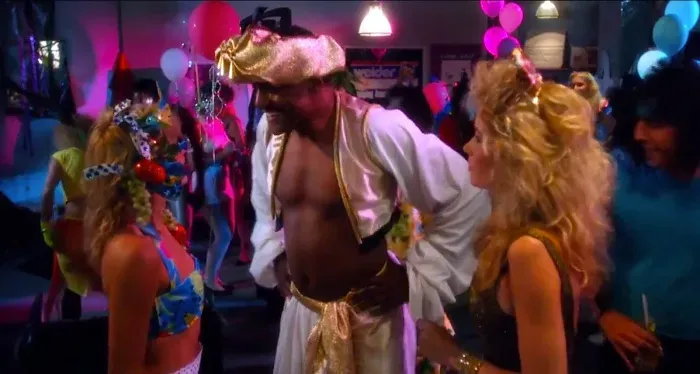
The biggest one is Marvin (Ken Foree), Michael's best friend and wingman. His outrageous fits aside, Foree's Marvin is one of the few likable characters in the film. Easygoing and sincere, he seems like the one chill dude in the movie. Though the relationship between him and Michael often feels like a stunted frat-boy relationship. In one scene, Foree cheers Michael up after he comes back from seeing his recently maimed girlfriend in the hospital by playing pass football in the office. Men are but simple creatures, apparently.
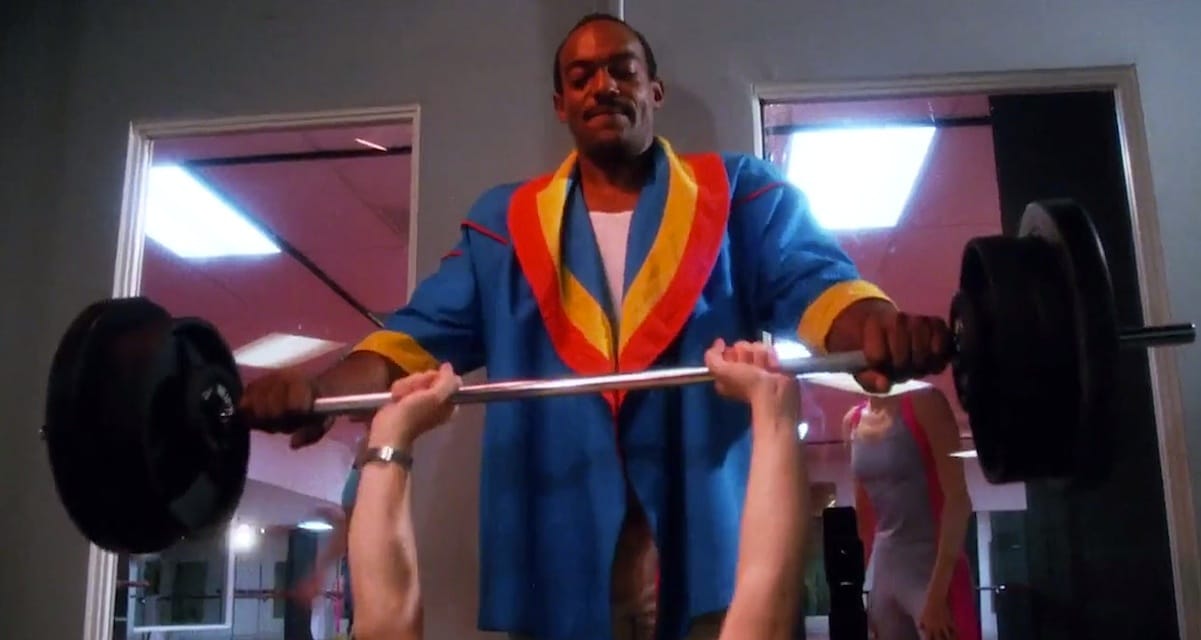
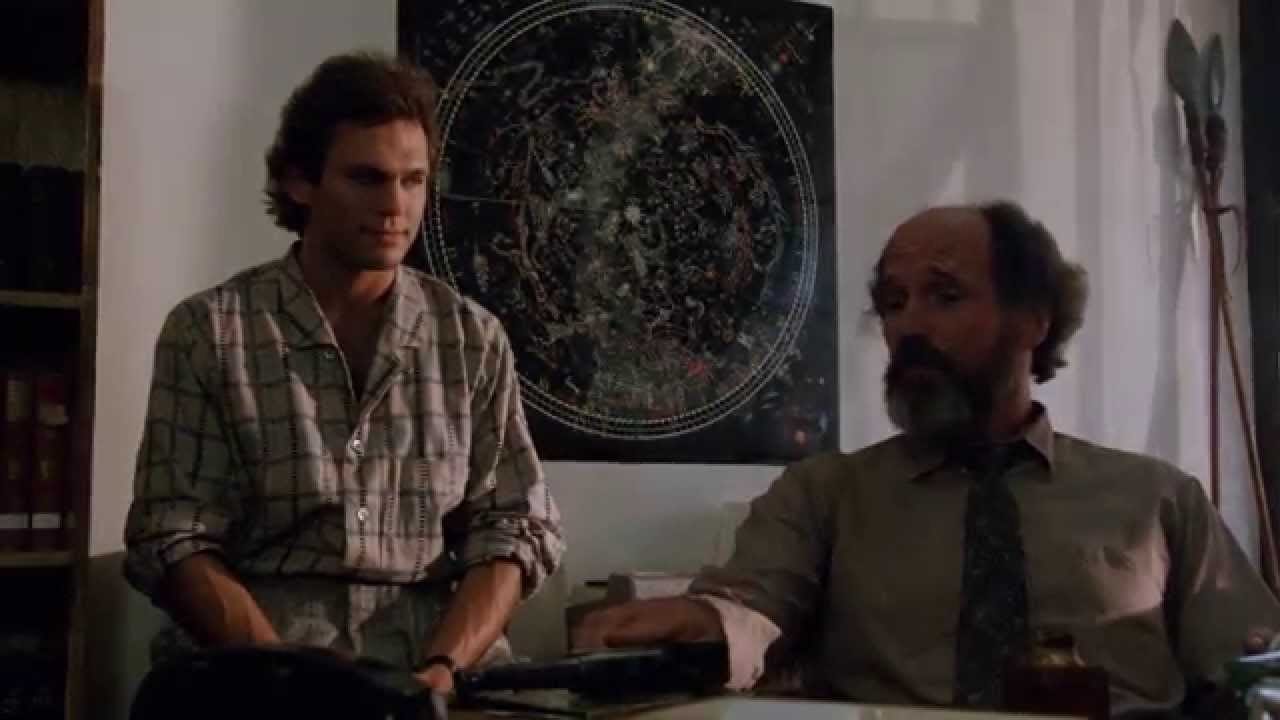
But it's Joseph Whipp as Dr. Lido Moray, the parapsychologist Michael hires to investigate the deaths at his gym and whether or not he really is being haunted by his psycho ex-wife. Whipp plays the part with a world-weary, sardonic smirk to him. An ex-monk, Dr. Moray, is one of those characters who comes in for a few brief scenes and practically walks away with the movie.
Death Spa has so much plot it almost doesn't know what to do with it. Between the corporate espionage, phantasmagorical homicides, the IT guy being Michael's gay ex-brother-in-law, not to mention a pair of cops so thinly drawn they could be blown away by a stiff breeze, Death Spa feels like it's lurching from one thing to another.
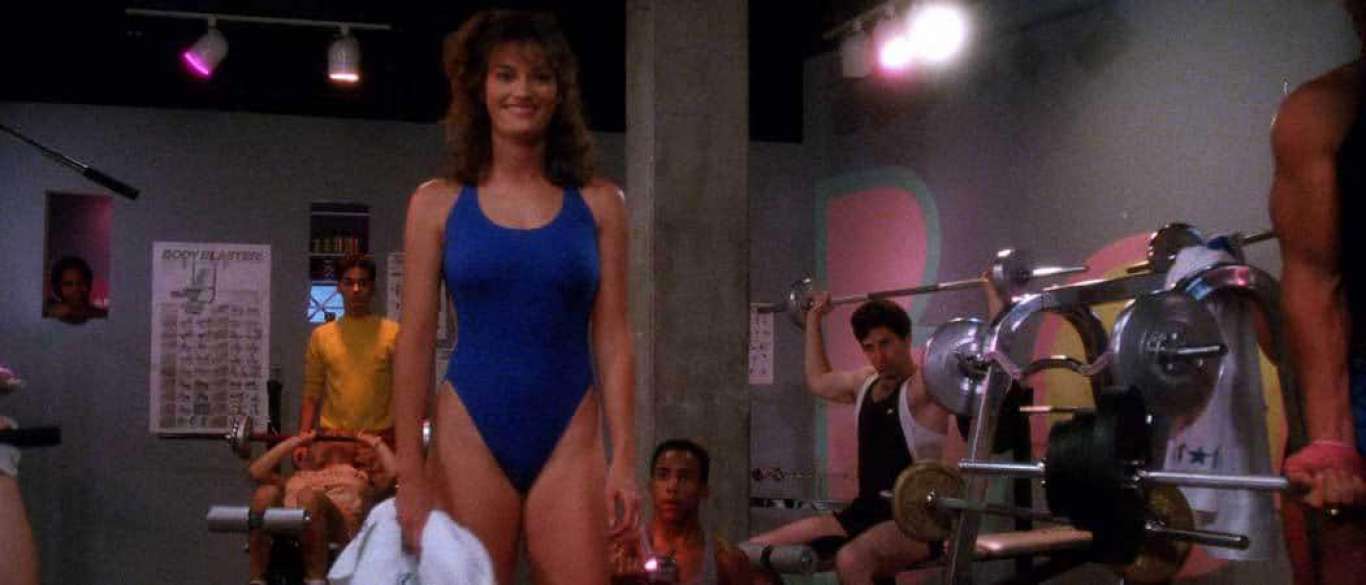
If it weren't for Fischa's style, the film would feel empty. But Fischa and Armenaki use color and dream sequences to craft a genuine sense of eeriness at times. Death Spa has an aesthetic; it simply lacks a cleavage aesthetic. The closest he comes to grip-framing is, ironically, another woman in blue, who we see repeatedly, but whom Fischa or Armenaki do little with.
Still, the gore effects in Death Spa are quite fun, and the deaths are right out of EC horror comics. The deaths lean towards the gnarly, defying logic or basic computer mechanics. It is a fool who looks for logic in the human heart or slasher films.
The real problem with Death Spa, aside from the woeful lack of full bosoms, is the anti-climax of its resolution. It builds, and builds, and builds, to an all-out cavalcade of murder and supernatural mischief and then just ends.
Meanwhile, Killer Workout, which feels like it was written on the back of matchbooks, has a remarkably, almost amoral, ending that leaves you clapping and giggling. No less wild, Prior's ending feels transgressive and ends the film with a memorable moment. I've seen Death Spa half a dozen times, and I'm always caught off guard by the abrupt ending.
Now, would a cadre of bra-busters make Death Spa a better movie? No. Would it make it more watchable? Oh, absolutely. But its flaws and attitudes would still be there. Whereas Killer Workout would still work without the nicely stacked cast and the cleavage aesthetic, but it would be a different movie. Film is a visual medium; therefore, the style is the substance. However, it's Killer Workout that uses the cleavage aesthetic as a way of pushing its themes, atmosphere, and imagery. Death Spa uses the gaze not as a lens but as set dressing.
Images courtesy of Academy Home Entertainment and MPI Media Group


Member discussion