
Get Lost in 'Delirium: The Photo of Gioio'
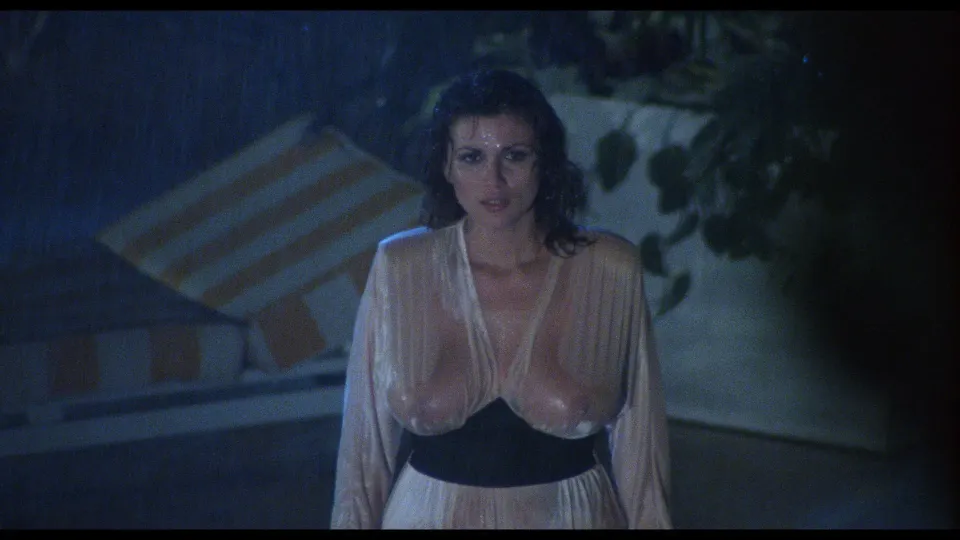
I am but a mere mortal. In my heart, I know Lamberto Bava’s Delirium: Photo of Gioioa (Le foto di Gioioa) is not the best Bava, nor even a great giallo. But it has Serena Grandi and Sabrina Salerno, two exuberant Italian sex bombs, and both of whom bare their ripe melons. I know I say breasts can’t save a movie, but if the film is merely okay, they absolutely can raise it to a solid, "worth every penny".
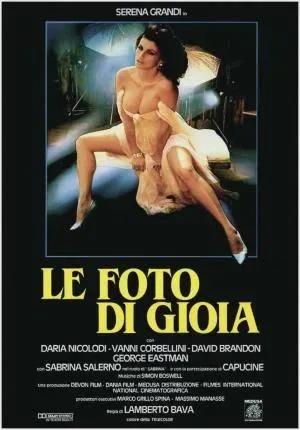
Delirium marks the end of an era for Bava. Afterwards, he would go on to work primarily in television. But with Delirium, while it’s not quite a bang, it’s a very good triple play. And that’s even without the magnificent breasts that pepper the film.
I can't hate a movie that smash cuts to a scene of Serena Grandi's fat milkers filling up the ENTIRE frame, dripping with soap. And I really can't hate a movie that has Grandi's hooters fill up the screen twice! To say nothing of how immoral it would be for me to hate a movie where Grandi treats every scene like it's the Paris catwalk and she's debuting the latest in shoulder pad fashion.
It would be heretical of me to hate a movie that finds ways to get racked popstar Sabrina Salerno, topless, and gives her one of the goofiest deaths in the film. If you're not familiar with Sabrina Salerno, she was an Italian pop sensation of the 80s who became a familiar face in Italian sex comedies. Her death involves a swarm of bees. If you're a fan of phallic imagery, Bava and editor Mauro Bonanni have you covered as they cut to scenes of bees plunging their stingers into her soft flesh.
I won’t waste time describing the plot. Delirium is a giallo, Italian slashers on steroids that traffic in melodrama, sleaze, and manic stylization. To try to sift through the narrative rubble of a plot in a giallo is not only a fool’s errand, but it also misses the point. Though typical Bava, he doesn’t do anything by the book. Delirium has the structure of a giallo but the heartbeat of an erotic thriller and the pulse of a psychological suspense.
In other words, like American slashers, giallos are pure cinematic Id. Logic is thrown out the window in favor of heightened theatrics. If you’re the type of person who wonders why someone like Gloria (Serena Grandi) doesn't seem more curious when her neighbor calls and tells her he saw one of her models stabbed to death in her pool, then see yourself out through the lobby. I hear Christopher Nolan has a movie coming out to your taste.
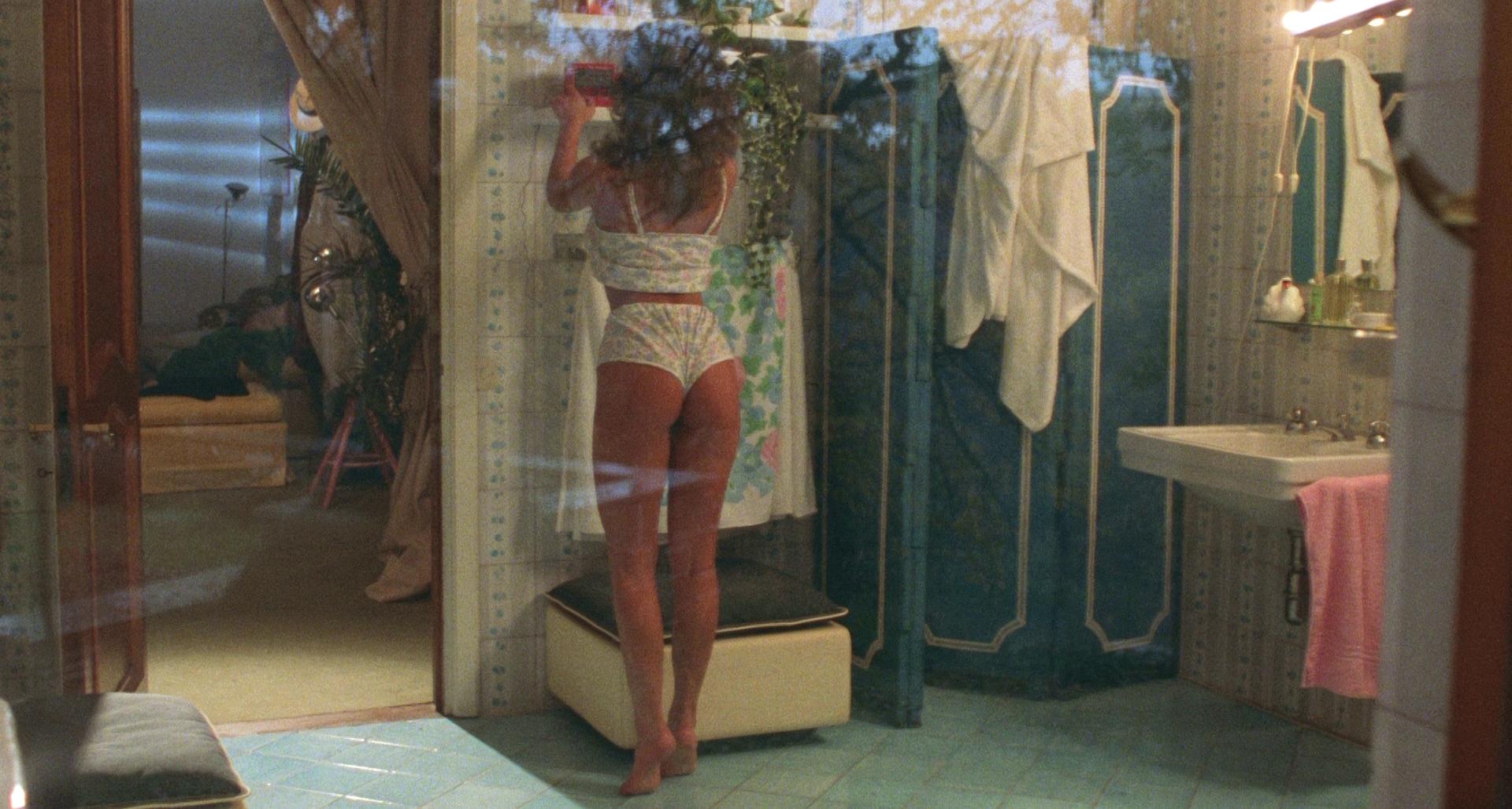
The rest of you pervs and sleazoids, buckle up. Bava’s arm isn’t what it used to be, but he’s still capable of throwing heaters at least once an inning. When Delirium works, it’s as captivating and as titillating as anything in the genre. Bava throws out all the stops with the production design and surreal imagery when it comes to the kills.
Bava echoes Michael Powell's iconic and lurid Peeping Tom with how he plants us into the killer's psyche even while keeping their identity a secret. He and longtime collaborator cameraman Gianlorenzo Battaglia shoot the murders from the killer's POV, drenching the frame in garish reds and artic blues. But what makes the deaths so memorable and unsettling is how, through the killer's perspective, we see the victim as deformed mutants.
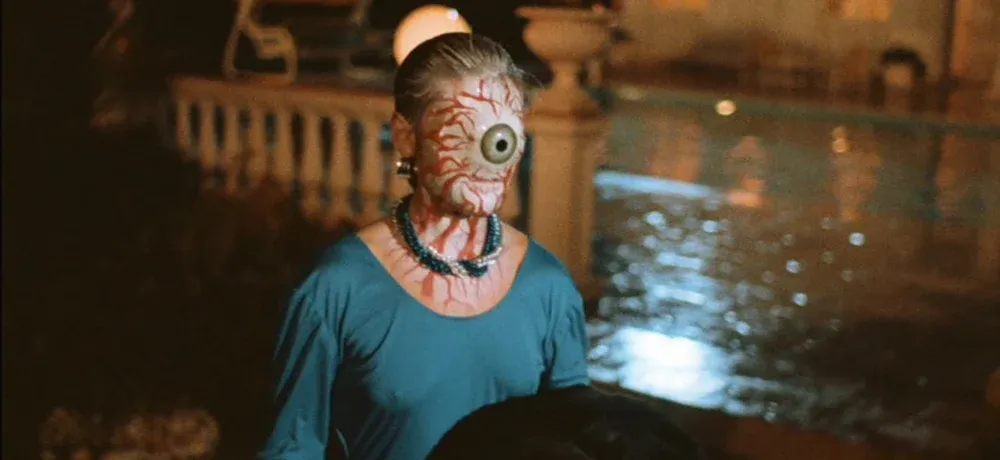
The first victim is Kim (Trine Michelsen), the rising star of Gloria's softcore magazine, "Pussycat". (This is what Delirium considers subtle.) Through the killer's eyes, we see her not as a gorgeous blonde but as a cyclops, bathed in haunting blood-red lighting. Her death is perfunctory, compared to Salerno's. Kim is stabbed by a pitchfork. (Another phallic symbol!)
Weirdly, Bava only utilizes this technique twice. Much of the reason why Delirium feels so sluggish towards the middle is due to Bava dropping the sheer artistry when it comes to the kills. After Salerno's magnificent nude ballet of shrieking and jiggling, the kills happen offscreen. The reason, of course, is that if Bava continued to show the killings in this manner, he would reveal the killer.
Strange, that for a genre that has rarely ever been concerned with anything as petty as narrative consistency, that Bava, of all people, would be a slave to it. The twist isn't that much of a shocker, especially by giallo standards. So, Bava's attempt at keeping it hidden to "play fair" seems odd.
However, while Delirium stumbles as a giallo, it is riveting as an erotic mystery thriller. The film may stumble, but thanks to Grandi, it never grinds to a halt. She is electric as a woman fraught with anxieties, even before the murders start.
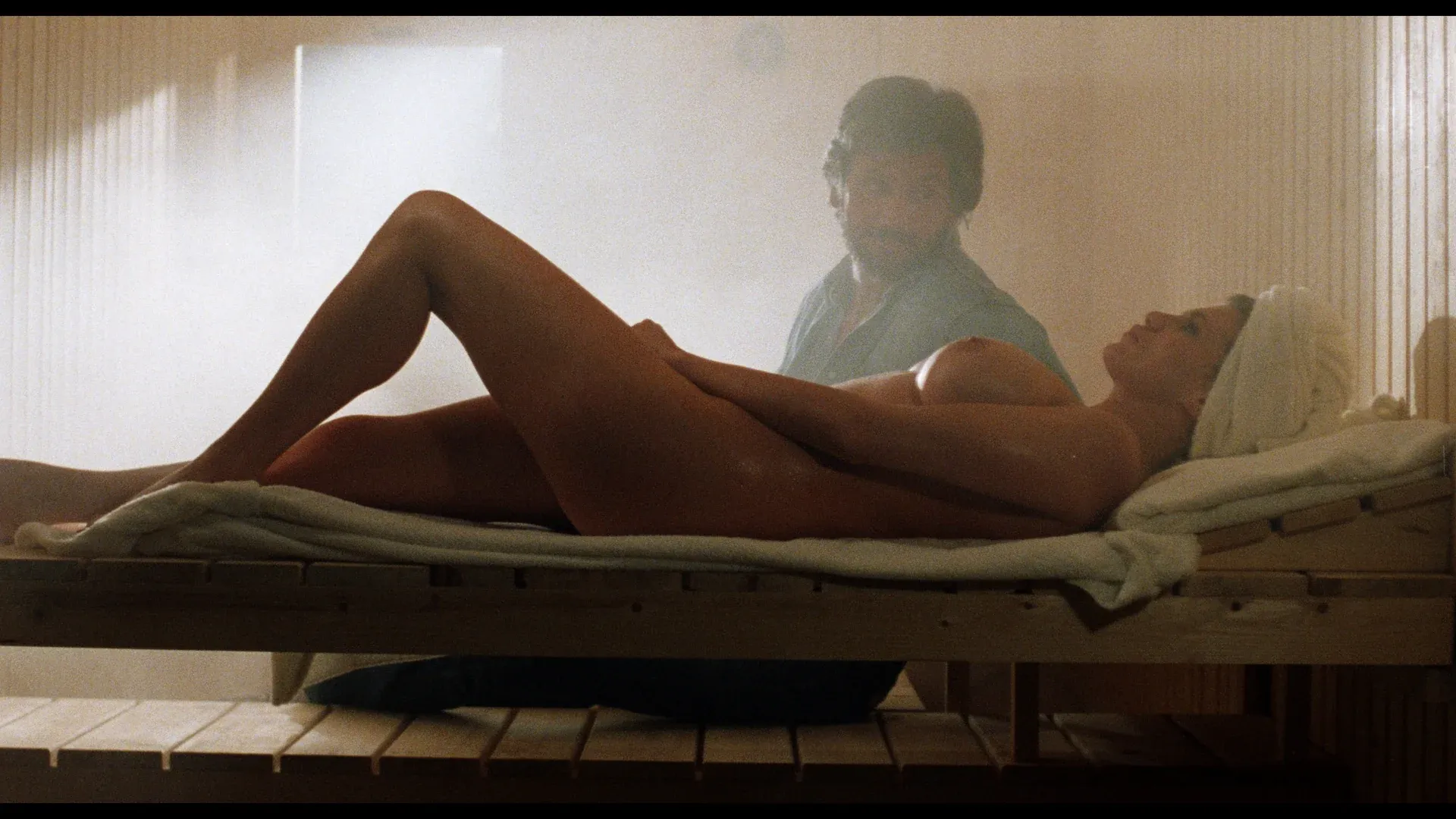
Gianfranco Clerci and Daniele Stroppa's script may not win any awards, but it lays enough groundwork for Grandi to play with. In lesser hands, Gloria would be little more than fodder for the gaze. But the script grants Gloria a complex interior.
She's a former cover girl of the very magazine she runs. Grandi plays the scenes at the magazine with a mixture of false bravado, trepidation, and insecurity. With her brother Tony (Vanni Corbellini), the photographer Roberto (David Brandon), and assistant Evelyn (Daria Nicolodi), members of her inner circle, she is less guarded, more vulnerable.
Gloria inherited the magazine from her husband, whom everyone thinks she married for money. (His death remains one of the most hysterical little bits of dialogue in the movie. His speedboat flipped in the wind.) But she loved him. Throughout the movie, she battles against the image people have of her, both as a sex symbol and as a businesswoman.
She's already caught in a maelstrom of emotions before the murders start. Heck, she gets dirty phone calls from the paraplegic next door, Mark (Karl Zinny). Gloria never reports him, and strangely, seems to encourage him. Perhaps because she feels as if she understands his grief. He, too, lost his fiancée in a crash that crippled him.
Clerici and Stroppa’s script is utter nonsense. A good thing, too, because I can’t imagine what a bore Delirium would be if we understood everyone’s motivations. What drives Mark to spy on Gloria? (Besides bra busting obvious reason?) Why does Mark make creepy phone calls where he goes into details about his fantasies about her, sitting in his game room surrounded by guns and animal heads? Why does Gloria seem only mildly annoyed with him?
The motivation doesn't matter. Visually, Bava is saying Mark sees Gloria, like all men do, as just another trophy. He's so crippled by this shallow perception of her that he is trapped in a wheelchair. We learn Mark is not a paraplegic but instead suffering from psychosis, making him believe he is. The script suggests survivor's guilt, but Bava suggests Mark's own immaturity.
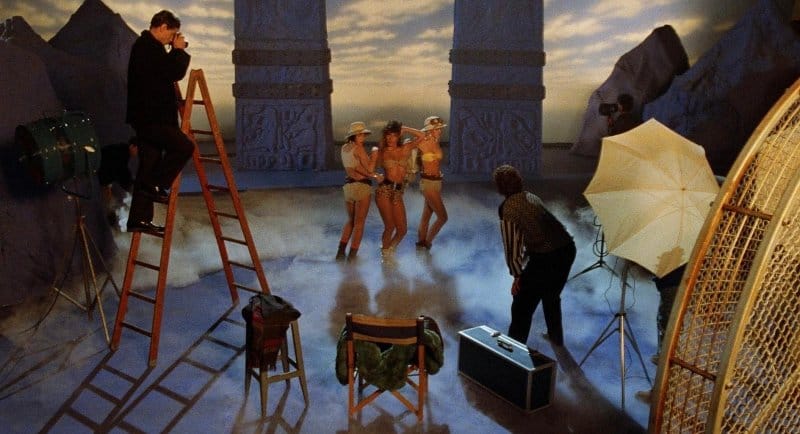
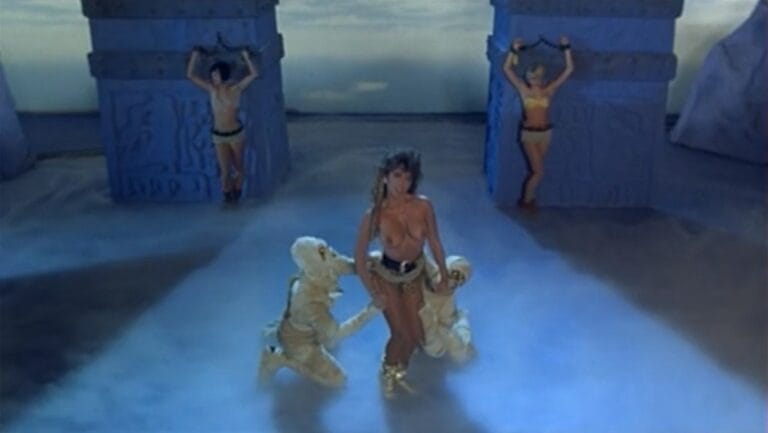
What makes Delirium so compelling, however, is the meta-text Bava weaves throughout the film in regard to voyeurism and the act of looking. Bava and Battaglia's camera treats Roberto's camera like a phallus, going so far as to lovingly visually caress the phallic substitute. In one clever instance, Bava and Battaglia have a shot of Roberto photographing the models, the camera lens taking up the corner of the screen, with Mark in the background with his telescope. Gloria is being watched even when she is not the model; always watched yet always alone.
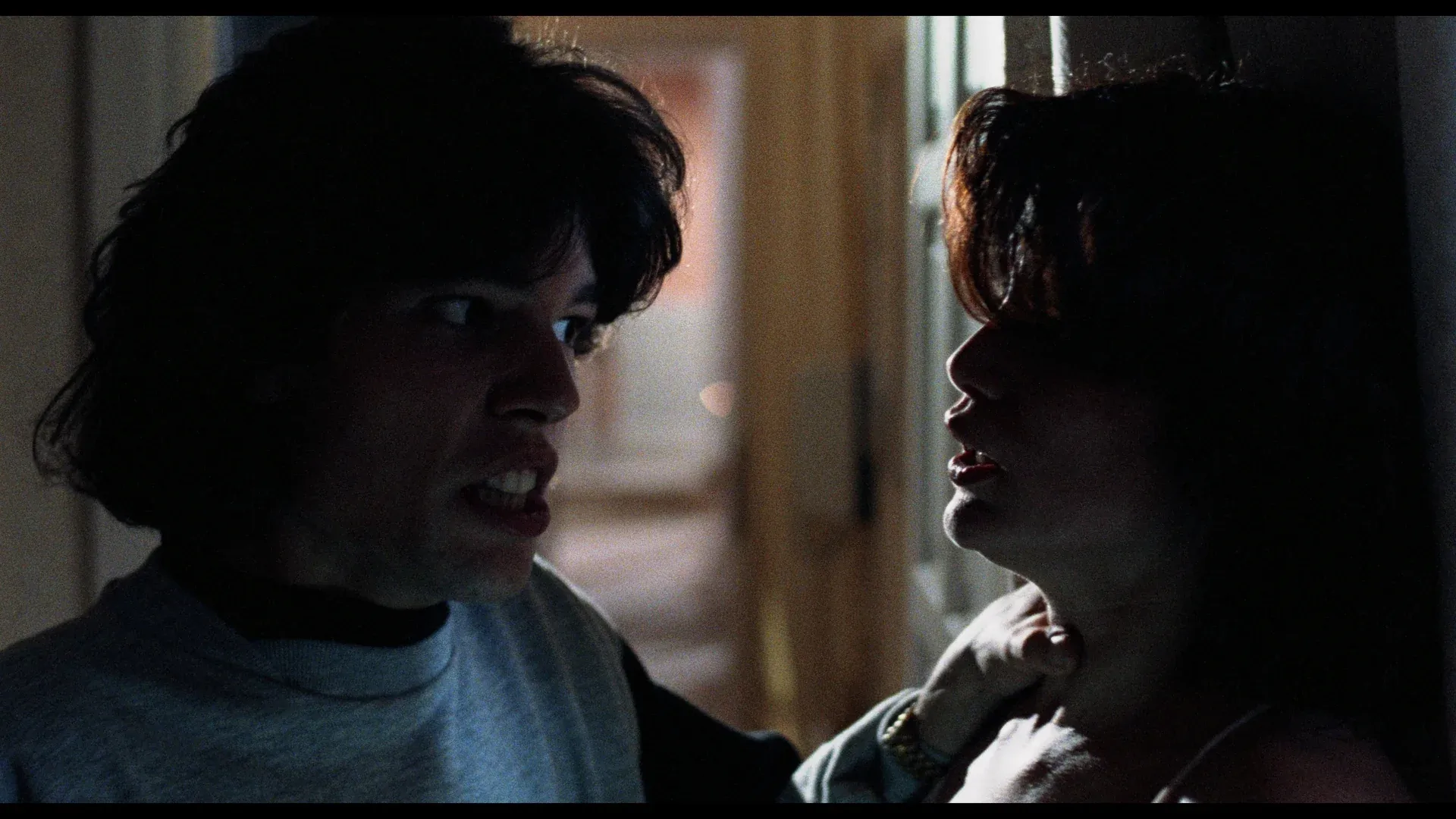
Bava hints at Gloria's keen subconscious perception with a scene where she has a dark erotic dream about Mark. In the scene, Mark breaks into her house and threatens to sexually assault her with a glowstick. But in the dream, Mark is revealed not to be a paraplegic. Something we learn later on. Bava drops the ball, however, and like so much of Delirium, these little moments rarely build to any kind of crescendo.
The mystery aspect doesn't work despite Inspector Corsi, played by Lino Salemme, and his wonderful, distinct face. Characters throughout the film quip that he looks more like a hoodlum than a cop. But his role is fleeting. The mystery aspect feels undercooked.
Herein lies the problem. For every moment of Bava's masterful touch, we have ten moments of characters behaving irrationally, even for a giallo film. Gloria refuses to sell her magazine to her competitor, former mentor, and former admirer, Flora, played by French fashion icon Capucine. Yet, halfway through the movie, she sells to Flora, and then decides to do a nude photoshoot in a mall to make some money. Granted, this doesn't have to make sense for the genre, but Bava's pacing is a couple of notches below breakneck, so the logical inconsistencies begin to take hold and nibble away at our suspension of disbelief. It doesn't sink the film, but it does hold it back from being the truly erotic gonzo giallo Bava is obviously capable of producing.
The real problem with the film is how Bava seems uninterested in everybody except Grandi and, briefly, Salerno. I can hardly blame him. If I had a movie with Serena Grandi and Sabrina Salerno, I'd spend most of my time filming them too.
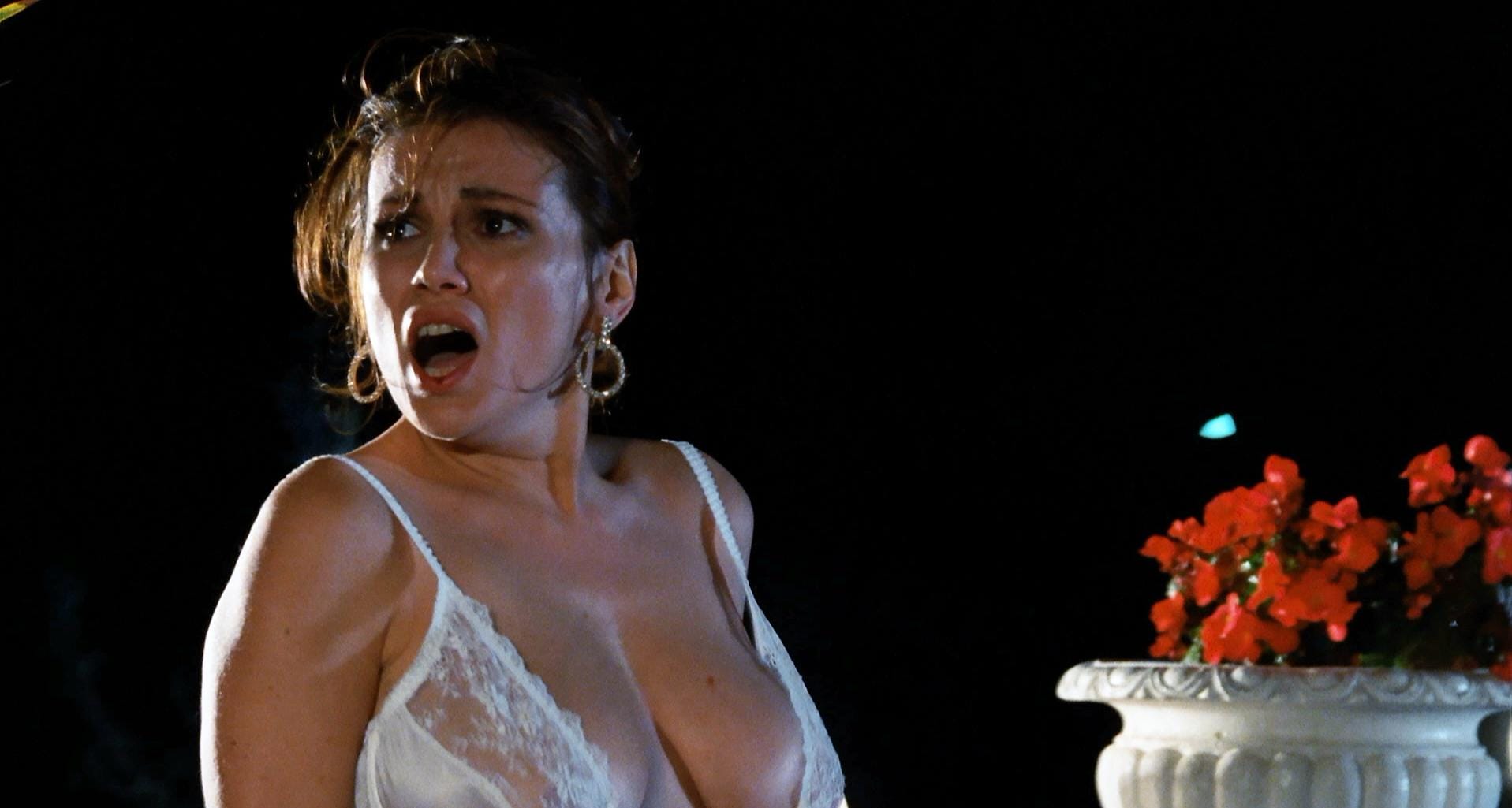
Ironically, Bava publicly regretted casting Grandi. Apparently, she had written into her contract that "she would barely show her tits," as she was trying to shed her sex symbol image.
The Italian definition of "barely" is vastly different from the American definition.
Ironically, it seems to have worked in the film's favor. I'm not sure how Grandi showing off her yabbos even more would have improved the film. All the issues that plague the film would still be there. Would it be nice to see Grandi unveil those national treasures even more? Undoubtedly. But would it do any good? Doubtful.
The blending of genres almost works. In another director's hands, Grandi or not, Delirium would likely be a hot mess with little to recommend it. But with the combo of Grandi, Bava, and Salerno, Delirium is well worth a watch.
Images courtesy of Shriek, Media Blasters, Dania Film, Devon Film, and Filmes International

Member discussion